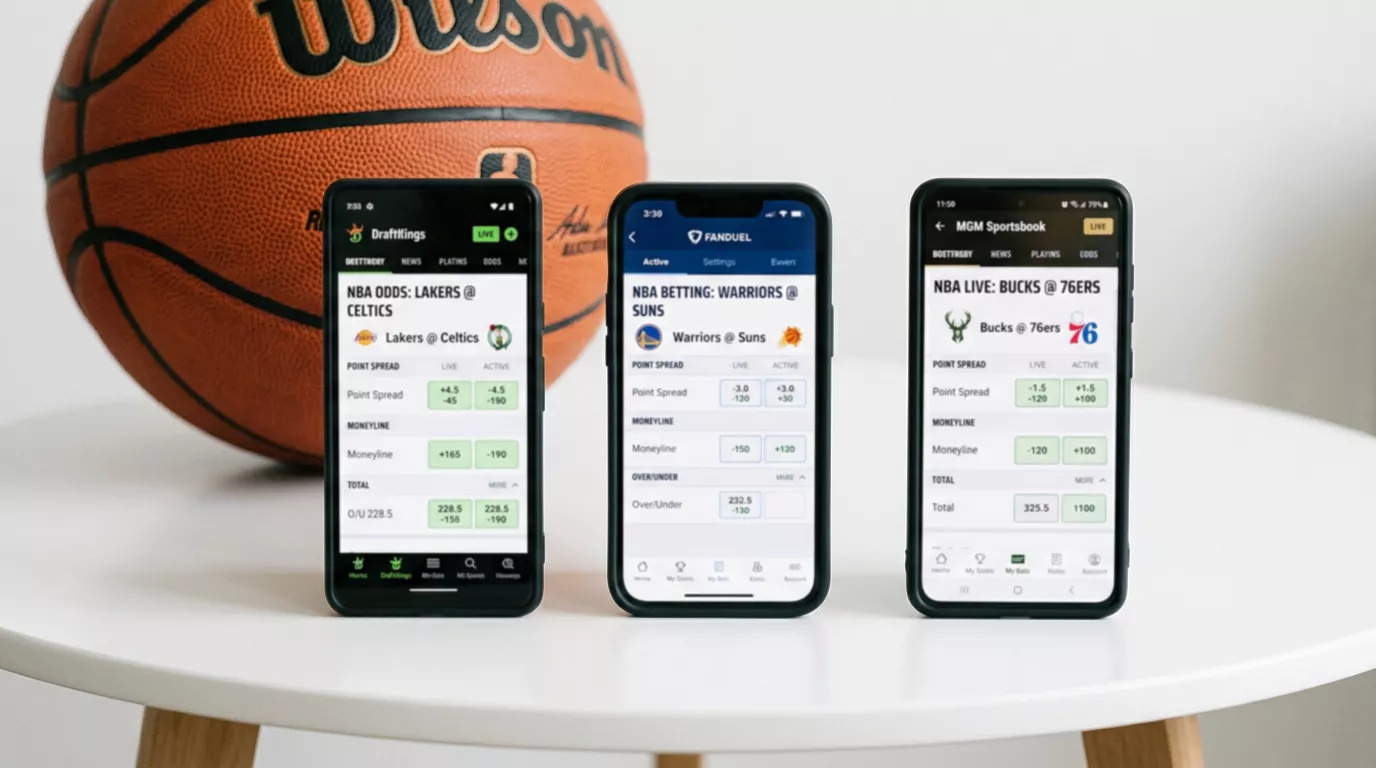
Basketball Betting Guide
UK Basketball Betting and Live Odds
By Basketball Betting Analyst
 Available in US
- The Essential Numbers and Actions Before You Place a Bet
- Why Basketball Is the UK’s Fastest-Growing Betting Market
- How Basketball Betting Works for UK Punters
- Types of Basketball Bets: From Moneyline to Micro Markets
- UK Odds Formats: Decimal, Fractional, and American
- NBA Betting: Why the World’s Biggest Basketball League Dominates the Market
- Beyond the NBA: EuroLeague, BBL, and Other Leagues Worth Betting On
- Live Basketball Betting: How In-Play Markets Change the Game
- Bankroll Management and Pre-Bet Strategy
- UK Gambling Regulation: What Every Basketball Bettor Must Know
- Responsible Gambling Tools and Self-Exclusion in the UK
- Frequently Asked Questions About Basketball Betting
The Essential Numbers and Actions Before You Place a Bet
- Basketball accounts for roughly 10% of global betting activity, and the UK market is projected to reach $21.3 billion by 2030 — basketball is one of the fastest-growing segments within it.
- A typical NBA game now offers around 1,800 betting markets, from moneyline and spread to micro-bets that settle in seconds. Start with the three core types: moneyline, point spread, and over/under totals.
- Live betting represents 62% of all online sports wagering globally, and basketball’s four-quarter structure makes it particularly suited to in-play markets — but set session limits before you start.
- The average sportsbook hold rate has risen from 6.7% to 10.15% since 2018. Disciplined bankroll management — staking 1-3% per bet, tracking every wager — is the single most important edge you control.
- UK betting winnings are tax-free, but verify your sportsbook holds a UKGC licence and use the responsible gambling tools every licensed operator is required to provide.
Why Basketball Is the UK’s Fastest-Growing Betting Market
Three years ago, I sat in a London pub watching an NBA game on a Tuesday night, and counted exactly four people paying attention. Last month, same pub, same weeknight slot — standing room only, half the crowd refreshing their sportsbook apps between quarters. Basketball betting in the UK has gone from niche curiosity to genuine phenomenon, and the numbers confirm what my eyes already told me.
Basketball accounts for roughly 10% of global online betting activity, a figure that has been climbing steadily as the sport’s UK fanbase expands beyond the traditional football-first audience. The UK gambling market itself generated £16.8 billion in gross gaming yield in the year to March 2025, a 7.3% year-on-year increase, with the online segment driving that growth. Market projections put UK sports betting at $21.3 billion by 2030, growing at 11.4% annually — and basketball is one of the segments pulling that number upward.
Football still dominates global betting with a 35% share, but basketball is the fastest-growing major sport for wagering among younger demographics. The gap is narrowing season by season, particularly in markets like the UK where NBA coverage has expanded dramatically.
What makes basketball such a compelling betting sport is its structure. Forty-eight minutes of constant action, four distinct quarters, dozens of statistical categories tracked in real time, and a scoring system that produces momentum swings no other sport can match. For someone used to betting on football, where a 1-0 lead can freeze a match for seventy minutes, basketball feels like a different universe — one where opportunities keep appearing right up to the final buzzer.
I have spent the past decade analysing basketball betting markets across UK and European sportsbooks, and this guide distils everything I have learned into a practical framework. Whether you are placing your first basketball bet or sharpening an existing approach, what follows covers the full landscape: how betting works in the UK context, every major bet type with real examples, odds formats, the leagues worth your attention, live betting tactics, bankroll discipline, and the regulatory framework that protects you.
How Basketball Betting Works for UK Punters
My first basketball bet was a disaster — not because I lost, but because I won without understanding what I had actually done. I backed a moneyline on a Lakers game at decimal odds of 1.85, collected my payout, and could not have explained to anyone why 1.85 meant what it meant or how the bookmaker had arrived at that number. It took me weeks of deliberate study before I stopped gambling and started betting. The difference matters.
Basketball betting in the UK operates within the same licensed framework as football, horse racing, and every other sport covered by UKGC-regulated sportsbooks. You place a wager on a predicted outcome, and if you are correct, you receive a payout determined by the odds at the time of your bet. The mechanics are identical to what football punters already know. What changes is the sport’s rhythm, the volume of available markets, and the data that feeds your decisions.
Every legitimate UK sportsbook holds a licence from the UK Gambling Commission. This means your funds are protected, dispute resolution is available, and the operator must comply with responsible gambling requirements. If a sportsbook does not display a UKGC licence number, walk away.
The UK betting landscape is overwhelmingly digital. Around 95% of online gambling happens from home, and 76% of bettors aged 18 to 24 use mobile phones as their primary device. That mobile-first reality shapes how sportsbooks present basketball markets — quick-access bet slips, swipeable odds columns, one-tap accumulators. It also means you can place a bet during halftime of an NBA game at one in the morning, which is both convenient and a reason to have firm rules about when and how much you wager.
Participation numbers tell their own story. Ten percent of the UK adult population actively bets on sport online, with a pronounced gender split: 15% of men versus 4% of women. Approximately 290 million online bets on real events are placed every month across the country. Basketball’s share of that total is growing, driven by expanded NBA broadcasting and the sport’s natural fit with in-play and micro-market formats that appeal to a younger audience.
Stake — the amount of money you place on a bet. Your potential payout is calculated by multiplying your stake by the odds.
Odds — a numerical expression of the probability of an outcome and the return you will receive if your bet wins. UK sportsbooks typically display basketball odds in decimal format.
The fundamental process is simple: open a UKGC-licensed sportsbook, navigate to basketball, choose a league and match, select a market, enter your stake, and confirm. The sportsbook calculates your potential return instantly. Everything else — strategy, analysis, timing, bankroll management — builds on top of this loop.
What separates basketball from most sports you might have bet on before is the sheer density of markets per game. A typical Premier League football match might offer a few hundred betting options. An NBA game routinely offers ten times that number, covering everything from match winner to how many three-pointers a specific player will sink in the third quarter. That volume creates opportunity, but it also creates noise. Learning to navigate it is what this guide is for.
Types of Basketball Bets: From Moneyline to Micro Markets
When I started analysing basketball markets professionally, I made a chart of every bet type available on a single NBA game. The list ran to three pages. That was five years ago — today it would be five pages, because the market explosion has been relentless. Sportradar’s CEO, Carsten Koerl, put it plainly: they now offer 1,800 new markets per NBA game, including player markets and micro markets, and the NBA’s numbers reflect that growth.
You do not need all 1,800 markets. You need to understand the core bet types thoroughly, recognise which secondary markets offer genuine value, and know when the exotic options are worth exploring. Below is each major category, starting with the simplest and building toward the more complex. If you are coming from football betting, you will find familiar logic in unfamiliar packaging.
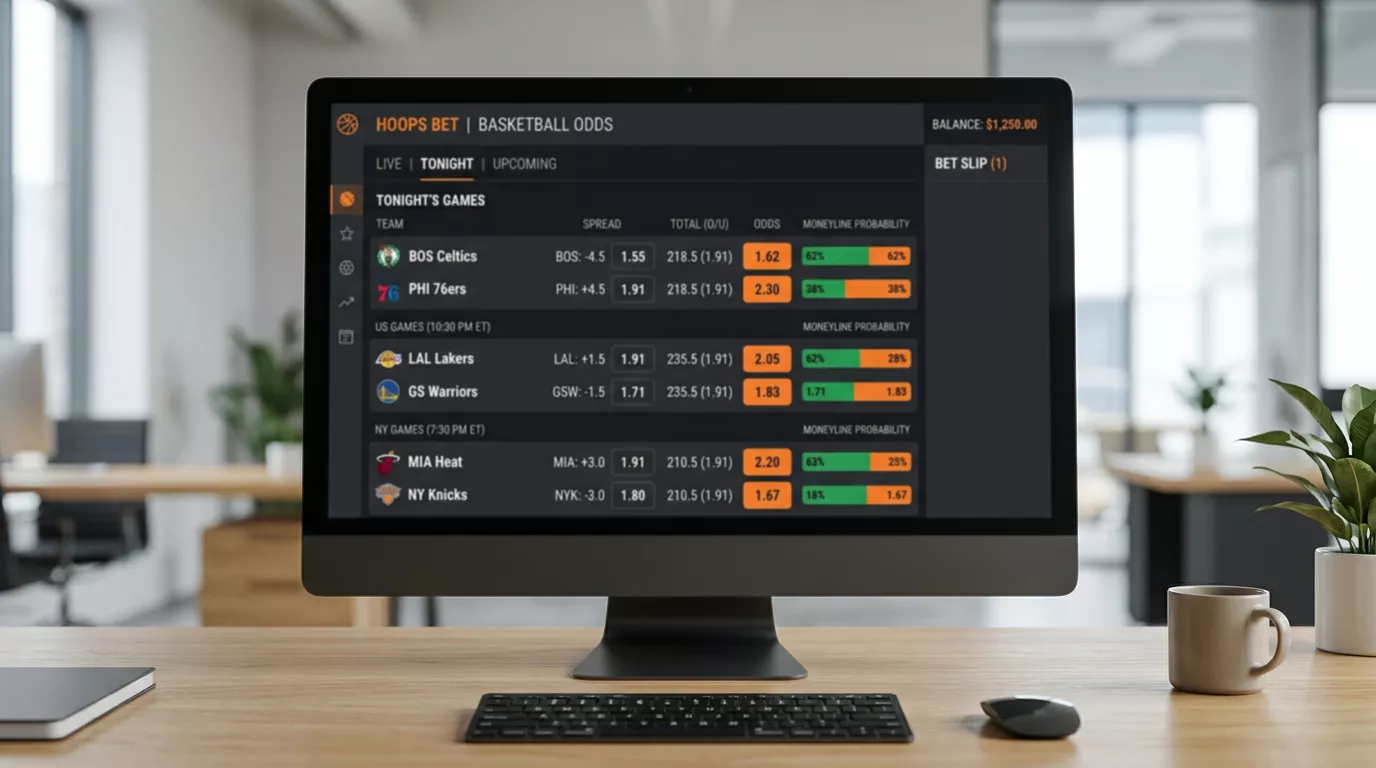
Moneyline — Match Winner
The moneyline is the purest bet in basketball: pick which team wins, full stop. No point margins, no statistical thresholds — just the outright result. In basketball, unlike football, there is no draw. Every game produces a winner, because tied scores at the end of regulation go to overtime, and overtime continues until someone is ahead. That binary outcome makes the moneyline the cleanest entry point for new basketball bettors.
Moneyline example
| Team | Decimal Odds | Stake | Potential Return |
|---|---|---|---|
| Team A (Favourite) | 1.45 | £10 | £14.50 |
| Team B (Underdog) | 2.80 | £10 | £28.00 |
The favourite carries lower odds because the market considers them more likely to win. The underdog pays more precisely because they are less likely to win. Your job as a bettor is not simply to pick winners — it is to identify situations where the odds offered are more generous than the actual probability warrants. A team that wins 60% of the time but is priced as though it wins 70% of the time is a poor moneyline bet, regardless of how talented they are. This concept — value — underpins every serious betting decision, and I will return to it throughout this guide.
One important note: moneyline bets in basketball include overtime. If your team trails by three at the end of regulation but wins in the extra period, your bet wins. This differs from some spread and totals markets, where overtime rules vary. Always check the settlement terms on your sportsbook, because this single detail has cost more bettors money than any strategic error I can name. For a deeper look at when moneyline bets make more sense than spreads, the full spread betting guide breaks down that decision framework.
Point Spread at a Glance
The point spread exists because not every basketball game is competitive. When one team is clearly stronger, the moneyline on the favourite pays almost nothing, and the moneyline on the underdog feels like charity. The spread levels the playing field by adding or subtracting points from a team’s final score for betting purposes.
Point spread (handicap) — a margin of victory set by the bookmaker. The favourite must win by more than the spread for a bet on them to pay out. The underdog can lose by fewer points than the spread (or win outright) and still “cover.”
Suppose the spread is set at -6.5 for Team A. If Team A wins by 7 or more, they cover the spread and your bet wins. If they win by 6 or fewer — or lose — they fail to cover and your bet loses. The half-point eliminates the possibility of a push (a tied result against the spread), which is why you will see .5 spreads far more often than whole numbers in basketball.
Spread betting is where basketball analysis really begins to matter. It is not enough to know who will win; you need a view on the margin. Rest days, travel schedules, injuries to key rotation players, pace of play — all of these influence whether a seven-point favourite covers or falls short. I spend more time on spread analysis than any other market, and it consistently rewards careful preparation.
Over/Under Totals
Totals betting — also called over/under — strips away which team wins and focuses on a single question: will the combined final score land above or below a number set by the bookmaker? An NBA game with a total of 224.5 means you are betting on whether both teams together will score 225 or more (over) or 224 or fewer (under).
Totals example
| Market | Line | Decimal Odds |
|---|---|---|
| Over | 224.5 | 1.91 |
| Under | 224.5 | 1.91 |
What makes totals particularly interesting in basketball is the number of variables that influence scoring. Pace — the number of possessions per game — is the single biggest driver. Two fast-paced teams will produce more shot attempts, more transition baskets, and a higher combined score. Defensive matchups, altitude (Denver’s home court sits at 1,600 metres, and visiting teams often tire in the fourth quarter), and even referee crew tendencies can push a total in one direction. More than 1.8 million bets totalling roughly $81 million were placed on third-quarter totals alone during the 2024-25 NBA season, which tells you how granular this market has become.
Totals are also available at half and quarter level, and those shorter-window markets are where I find some of the most interesting edges. But that is a story for the live betting discussion later in this guide.
Props, Futures, and Micro Markets
Props — short for proposition bets — shift the focus from team outcomes to individual performances. Will a specific player score over 24.5 points? Grab more than 8.5 rebounds? Record a double-double? These markets let you bet on what a player will do, independent of whether their team wins or loses. Futures, by contrast, are long-range bets on season outcomes: who wins the championship, who is named MVP, how many regular-season games a team will win.
40% of adult Gen Z fans have a favourite NBA player — the highest attachment rate of any major sports league. Yet only 2% of all basketball bets target player-specific markets. That gap between fandom and wagering represents one of the biggest untapped opportunities in the sport.
Then there are micro markets, the newest frontier. Next-possession result, next player to score, whether the next free throw goes in — these rapid-fire options settle within seconds and have exploded in availability. Sportradar now tracks 63 million bets across NBA regular-season games, with the micro and player categories driving much of that volume growth. Micro markets are thrilling, but they also carry genuine risk of overexposure, and I treat them with considerably more caution than traditional markets.
For a thorough breakdown of how to analyse player performance lines using statistical frameworks, the player props betting guide goes well beyond what I can cover here. And if building multi-leg bets from these markets appeals to you, the accumulator tips piece addresses how to structure parlays without falling into the correlation traps that catch most bettors.
UK Odds Formats: Decimal, Fractional, and American
I once watched a friend dismiss a bet because the odds “looked wrong.” He was staring at American-format odds on a US-based stats site, seeing +180 and -220, and had no idea those numbers translated to perfectly reasonable decimal odds he would have recognised instantly. Odds format confusion is the single most common barrier I see among UK bettors venturing into basketball, and it is entirely fixable in about ten minutes.
UK sportsbooks overwhelmingly default to decimal odds for basketball. Decimal is the simplest format: the number you see is your total return per pound staked. Odds of 2.50 mean a £10 bet returns £25.00 (your £10 stake plus £15 profit). Odds of 1.40 return £14.00 on a £10 stake. Your profit is always (odds – 1) multiplied by your stake. Clean, intuitive, and the reason most European sportsbooks have adopted it as the standard.
Decimal Odds
Total return = stake x odds. A £10 bet at 3.00 returns £30 (£20 profit). Most UK sportsbooks display basketball this way by default. Easy mental arithmetic: if the decimal is above 2.00, you more than double your money.
Fractional Odds
Profit expressed as a fraction of stake. 5/2 means £5 profit for every £2 staked (equivalent to decimal 3.50). Familiar to UK horse racing and football bettors, but less common for basketball on modern platforms.
Fractional odds — the traditional UK format — express your profit relative to your stake. Odds of 7/4 mean you win £7 for every £4 you risk. Converting to decimal is straightforward: divide the fraction (7 divided by 4 = 1.75), then add 1 (1.75 + 1 = 2.75). I switched to decimal for all my basketball analysis years ago and never looked back, because when comparing lines across multiple sportsbooks, decimal makes the differences immediately visible.
American odds are the format you will encounter on US-focused sites, NBA analysis blogs, and sometimes within the stats columns of UK sportsbooks that pull data from American feeds. They revolve around the number 100. A positive number (+180) tells you how much profit you make on a $100 stake: $180 profit. A negative number (-220) tells you how much you need to stake to win $100: you risk $220 to profit $100. The conversion formulas are simple — positive American odds to decimal: (odds / 100) + 1; negative American odds to decimal: (100 / absolute value of odds) + 1 — but in practice, I recommend setting your sportsbook to decimal and only referencing American odds when reading US source material.
Converting American odds to decimal
American odds: +180. Divide by 100 = 1.80. Add 1 = 2.80 decimal.
American odds: -150. Divide 100 by 150 = 0.667. Add 1 = 1.667 decimal.
A bet at +180 (decimal 2.80) returns £28 on a £10 stake. A bet at -150 (decimal 1.667) returns £16.67 on a £10 stake.
Why does this matter beyond basic literacy? Because odds also encode implied probability — the market’s estimate of how likely an outcome is. Decimal odds of 2.00 imply a 50% chance (1 divided by 2.00). Odds of 1.50 imply 66.7%. Odds of 3.00 imply 33.3%. When you can read implied probability instinctively, you stop seeing odds as abstract numbers and start seeing them as the market’s opinion — an opinion you can agree with, disagree with, or identify as mispriced. William Hill captures 37.8% of PPC clicks for sports betting queries in the UK, but concentration does not mean uniform pricing. Lines differ between operators, and those differences are where informed bettors find value. The full odds explained guide walks through implied probability, margin calculation, and line-shopping strategy in detail.
NBA Betting: Why the World’s Biggest Basketball League Dominates the Market
There is a reason every UK sportsbook leads its basketball section with the NBA, and it is not just brand recognition. The NBA is the most bet-on basketball league on the planet by a margin that makes every other competition look like a regional event. Americans legally wagered $166.94 billion on sport in 2025 — an 11% year-on-year increase — and basketball (NBA plus college combined) accounted for roughly 28% of that total handle. No other basketball league comes close to generating that volume of betting interest, and volume matters because it drives liquidity, tightens lines, and produces the deepest market coverage available.
The four major US sports leagues collectively earned $4.2 billion from legal sports betting in 2025. The American Gaming Association’s Sara Slane described this as proof that collaboration between leagues and the gaming industry pays dividends for all sports stakeholders. For UK bettors, the practical implication is straightforward: NBA markets are the most liquid, most closely priced, and most thoroughly covered basketball betting markets you can access.

For UK bettors specifically, the NBA schedule offers a structural advantage that few people discuss. Regular-season games tip off at 00:00 to 03:30 UK time, which sounds inconvenient until you realise that evening kick-offs in other sports have already settled. The NBA occupies a slot where competition for your attention — and for bookmaker resources — is minimal. Lines are posted by late afternoon UK time, giving you a full working day to research before tip-off. I have found this schedule gap to be one of the most underappreciated edges for UK-based basketball bettors: while American bettors are still at work when lines open, you have had hours to study injury reports, lineup confirmations, and line movement.
Basketball is the favourite sport for betting among Gen Z in the United States. NBA fans bet 3.7 times more than the average American sports bettor, driven by the league’s player-centric culture and the natural fit between basketball’s fast pace and in-play wagering. The segment is projected as the fastest-growing in US sports betting through 2030.
The NBA’s relationship with the betting industry has deepened considerably. The league earns over $160 million annually from casino and sportsbook partnerships, growing at more than 10% per year. In 2024, the NBA granted FanDuel access to real-time player tracking data, enabling new bet categories based on movement and positioning metrics. Sportradar recorded 63 million bets during the 2024-25 regular season across roughly 1,800 markets per game — a tripling of market depth in twelve months.
That market explosion is not just a US phenomenon. UK sportsbooks licence the same Sportradar data feeds, which means the same player props, quarter-specific lines, and micro markets available to a bettor in New Jersey are available to you in Newcastle. The one area where UK access lags is promotional depth — US sportsbooks compete with sign-up bonuses that UK regulatory rules constrain — but the core product is functionally identical.
There is a tension beneath this growth worth acknowledging. The same season that saw 63 million bets also saw the FBI charge two former players — Terry Rozier and Chauncey Billups — in betting-related fraud investigations. NBA commissioner Adam Silver described the news as deeply upsetting, emphasising that competitive integrity remains the league’s highest priority. Forty-six percent of NBA players surveyed described league-bookmaker partnerships as “bad” for the sport. These are not reasons to avoid NBA betting, but they are reasons to bet with your eyes open, understanding that integrity monitoring is sophisticated but not infallible.
Beyond the NBA: EuroLeague, BBL, and Other Leagues Worth Betting On
I spent my first two years of basketball betting focused exclusively on the NBA, and I regret it. Not because the NBA is a poor betting product — it is the best — but because I left value on the table by ignoring leagues where bookmaker pricing is less efficient and information edges are more accessible.
The EuroLeague is the most compelling alternative. Europe’s top club competition features teams from Spain, Turkey, Greece, Israel, and beyond, with a quality of play that sits comfortably below the NBA but well above any other basketball league globally. For UK bettors, the EuroLeague has a scheduling advantage the NBA cannot match: games tip off between 18:00 and 21:00 UK time, slotting neatly into the same evening window as Premier League football. You can watch a EuroLeague game live, in full, without setting an alarm for the early hours.
NBA Markets
Deepest liquidity, tightest lines, up to 1,800 markets per game. Lines open early and attract sharp money globally. Pricing errors are corrected quickly. Best for: volume bettors, live betting, player props.
EuroLeague Markets
Moderate liquidity, wider lines, fewer markets per game but growing. Less sharp attention means pricing inefficiencies persist longer. Best for: research-driven bettors, spread and totals, pre-match value.
The British Basketball League is the domestic option, and I will be honest: BBL betting coverage remains thin. Most UK sportsbooks offer match winner and basic spread/total markets for BBL games, but the depth drops off sharply after that. Liquidity is low, which means bet limits are tight and line accuracy can be questionable. If you follow BBL teams closely and have genuine informational edges — knowledge of roster changes, injury situations, travel logistics — there can be opportunities. But for most bettors, the BBL is better treated as a spectating league than a serious betting one.
Other leagues worth monitoring include the Turkish BSL, Spanish Liga ACB, the Australian NBL, and FIBA international competitions. Each offers different characteristics: the NBL runs during the European winter, FIBA competitions carry national-team dynamics that create motivational mismatches, and the Liga ACB produces some of the tightest basketball in Europe. Basketball accounts for around 10% of global betting activity, and while the NBA dominates that share, the remaining fraction is distributed across leagues that collectively offer more market inefficiency than the NBA ever will.
Live Basketball Betting: How In-Play Markets Change the Game
Over the past season, I tracked every live bet I placed across 200 NBA games. My pre-game hit rate was 54.2%; my live-betting hit rate was 56.8% at higher average odds. The profit difference was significant — not because I became a better analyst during games, but because live markets frequently misprice momentum shifts, and basketball produces more of those per minute than any other major sport.
Live betting — in-play wagering — now accounts for 62.35% of all online sports betting activity globally. That figure is not a basketball-specific number, but basketball’s four-quarter structure, frequent scoring, and constant tactical adjustments make it perhaps the sport most naturally suited to in-play markets. When a key player picks up a third foul midway through the second quarter, the live line adjusts instantly — but the adjustment often overshoots or undershoots, creating windows for bettors who understand team depth and rotation patterns.
Live basketball markets open and suspend continuously throughout a game. Lines are recalculated during every dead ball — timeouts, free throws, quarter breaks. The speed of these recalculations depends on the data feed your sportsbook uses. Sportradar, the dominant provider, processes data from in-arena tracking systems and pushes updated odds within seconds of on-court events.
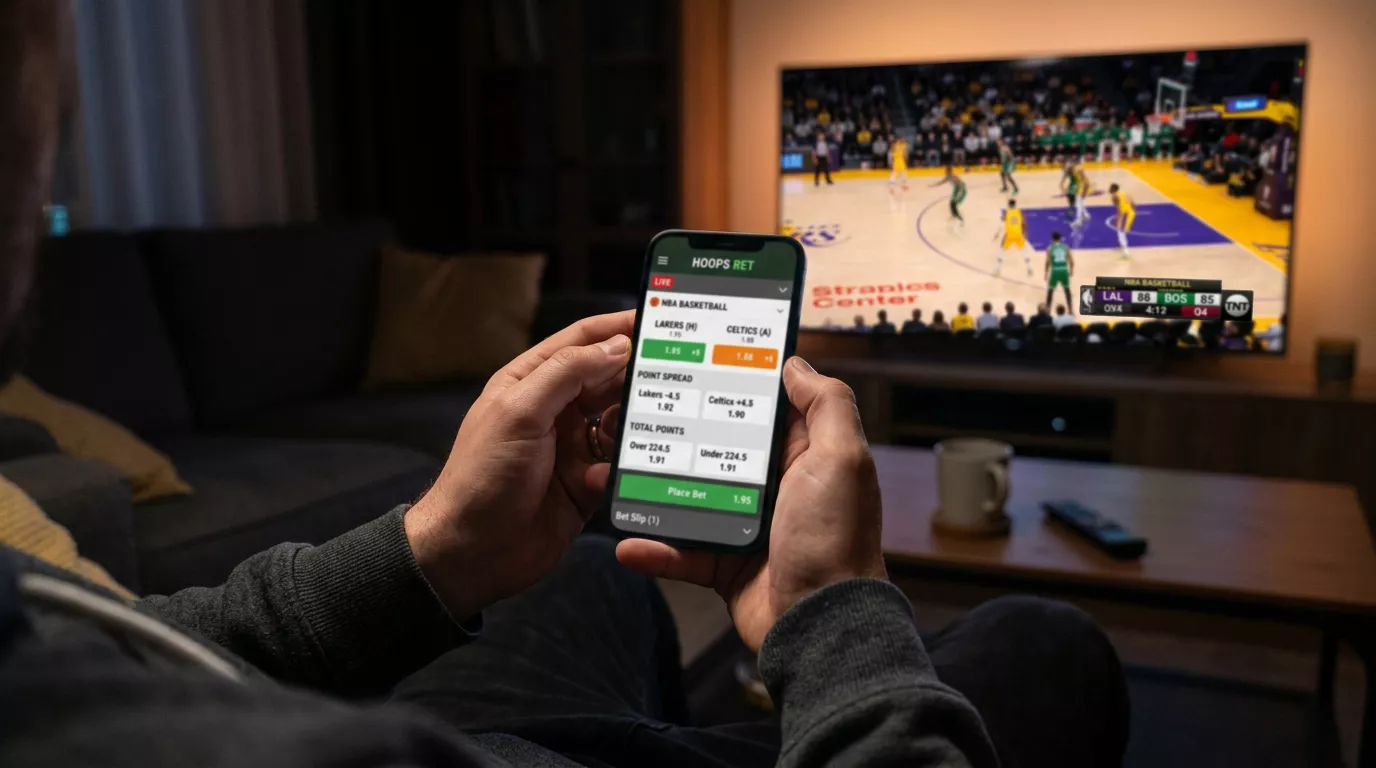
Quarter-by-quarter betting is where live basketball gets genuinely interesting. Sportradar’s own data from the 2024-25 season confirms the appetite: over 1.8 million bets totalling roughly $81 million were placed on third-quarter totals alone. The third quarter is popular for a reason — it is the period where coaching adjustments from halftime manifest, where fatigue from compressed schedules first shows, and where the line is most influenced by first-half results that may not predict second-half outcomes. Sportradar’s Carsten Koerl noted that every percentage point of in-game growth in the US translates to an additional $1.6 to $1.7 million in company revenue, which gives you a sense of how aggressively this segment is being developed.
For UK bettors, live NBA betting carries a practical consideration: the games run late. If you are placing live bets at 02:00 on a Tuesday, your decision-making is compromised by fatigue in ways that afternoon football bets are not. I have a personal rule — no live bets after 02:30, no exceptions — and I credit that boundary with protecting my bankroll more effectively than any analytical edge I have ever found. The emotional pull of live betting is real, particularly in a sport this fast, and self-imposed limits are not optional. They are part of the strategy.
The mechanics of cash-out timing, latency edges, and quarter-specific tactics go deeper than a pillar overview can cover. The live betting strategy guide breaks down each quarter’s characteristics, momentum reading techniques, and the realistic edge available to UK bettors accounting for data-feed latency and sportsbook suspension patterns.
Live betting amplifies both opportunity and risk. Before you step into that faster current, the next section covers the discipline framework that keeps your bankroll intact regardless of which markets you trade.
Bankroll Management and Pre-Bet Strategy
I have seen sharp bettors with 58% hit rates go broke, and mediocre bettors with 52% hit rates grind steady profit over a full season. The difference was never analytical skill — it was bankroll management. How you size your bets, how you respond to losing streaks, and whether you have rules that operate independently of your emotions: these determine whether your betting survives long enough for your edge to compound.
The principle is straightforward. Define a bankroll — a fixed amount of money you can afford to lose entirely without impacting your life. Divide it into units. Stake a consistent percentage on each bet, typically between 1% and 5% depending on your confidence level. A £500 bankroll at 2% per bet means £10 stakes. Win or lose, the next bet is still £10 until you recalculate your unit size at predetermined intervals — weekly, monthly, or after a set number of bets.
The reason this matters more in basketball than in some other sports is volume. The NBA regular season runs 1,230 games across five months, plus playoffs. If you are betting two or three games per night, four nights a week, you can easily place 400+ bets in a season. At that volume, a small staking error compounds into a large bankroll leak. The average hold rate for American sportsbooks has climbed from 6.7% in 2018 to 10.15% in 2025, which means bookmakers are extracting a larger percentage of total wagers than ever before. You are swimming against a stronger current, and disciplined staking is how you stay afloat.
Do
- Set a fixed bankroll before the season starts and treat it as a business account, separate from personal finances.
- Use flat stakes (1-3% of bankroll) for standard bets and reserve larger sizing only for your highest-conviction plays.
- Track every bet — date, market, odds, stake, result — in a spreadsheet. If you cannot measure it, you cannot improve it.
- Set session limits for live betting: a maximum number of bets and a loss threshold per night.
Don’t
- Chase losses by increasing stake size after a bad night. This is the single fastest path to bankroll destruction.
- Bet on every game. Selectivity is a form of discipline. Some nights, the best bet is no bet.
- Ignore the hold rate. The house takes a cut on every market, and accumulator bets compound that cut multiplicatively.
- Confuse a winning streak with skill. Variance in basketball betting runs longer than most people expect.
Pre-bet checklist: before placing any basketball wager
- Confirm the bet fits within your unit-sizing rules for today’s session.
- Check injury reports and lineup confirmations — released 30 minutes before NBA tip-off.
- Compare the line to at least two other sportsbooks. If your line is an outlier, investigate why.
- Verify the market’s settlement rules: does this bet include overtime? Is it full-game or period-specific?
- Ask yourself: would I place this bet at 10% lower odds? If not, the value may be marginal.
- Log the bet immediately, before the result. Post-hoc record-keeping invites selective memory.
More advanced frameworks — the Kelly criterion, proportional staking models, variance-adjusted unit sizing — exist and have genuine utility for experienced bettors. They are beyond the scope of this overview, but I consider bankroll management the single most underrated skill in basketball betting. Everything else you learn in this guide is worthless if your bankroll is gone by February.
UK Gambling Regulation: What Every Basketball Bettor Must Know
Early in my career I made the mistake of treating regulation as background noise — something that existed but did not affect my day-to-day betting. Then the 2025 reforms landed, and I watched several operators scramble to adjust their product overnight. Regulation is not background noise. It is the architecture that determines what you can bet, how much you can stake, and what protections exist when things go wrong.
Every online sportsbook operating legally in the UK holds a licence from the UK Gambling Commission. The UKGC’s remit covers everything from ensuring games are fair and odds are transparent to enforcing responsible gambling requirements and preventing money laundering. If you are betting on basketball through a UKGC-licensed operator, you are operating within one of the most tightly regulated gambling environments in the world.
A Clifford Chance legal analysis described the 2025 reforms as a decisive shift in UK gambling regulation, positioning the country as a global leader in responsible gambling. For basketball bettors, the practical impact includes new stake limits and a mandatory gambling levy that funds treatment and research.
The 2025 regulatory package introduced several changes that directly affect online bettors. From April 2025, maximum stakes for online slots were capped at £5 for adults aged 25 and over, and £2 for those aged 18 to 24. While this applies to slots rather than sports betting, it signals the regulatory direction: tighter controls on high-frequency, high-risk products. More directly relevant, the statutory gambling levy — introduced in October 2025 — requires all licensed operators to contribute a percentage of their gross gaming yield to fund problem gambling research, education, and treatment. The UK gambling industry spends £2 billion annually on advertising, and the Gambling Commission’s own data shows that a person experiencing problem gambling is nine times more likely to receive a “free bet” offer than the average bettor. The levy is designed to counterbalance that asymmetry.
Basketball betting winnings in the UK are tax-free for the bettor. The tax burden falls on the operator through the point-of-consumption tax on gross gaming yield. You do not need to declare betting profits to HMRC. This contrasts sharply with the US, where sports betting winnings are taxable income.
The UK Gambling Commission’s executive director of research and policy, Tim Miller, addressed the broader participation landscape in 2025, noting increased gambling participation rates while clarifying that the growth was driven not by underage gambling but by greater participation in legal and unregulated social forms of betting. Understanding this context matters because it shapes the regulatory environment you bet within — an environment that is evolving rapidly and trending toward greater bettor protection at every level.
Responsible Gambling Tools and Self-Exclusion in the UK
A few years back, a friend asked me to help him “get better at basketball betting.” When I looked at his bet history, the problem was not his analysis — it was that he was placing 15 to 20 bets a night, every night, with escalating stakes after losses. He did not need a strategy guide. He needed to step back. That conversation changed how I think about responsible gambling: it is not a footnote at the bottom of a guide, it is the foundation the guide sits on.
Thirty percent of British children aged 11 to 17 spent their own money on some form of gambling in 2025, up from 27% the previous year, with 1.2% meeting the threshold for problem gambling. Forty-nine percent of that age group see gambling advertising on social media at least once a week. These numbers make the case for responsible gambling tools not as an afterthought but as a central feature of any informed bettor’s toolkit.
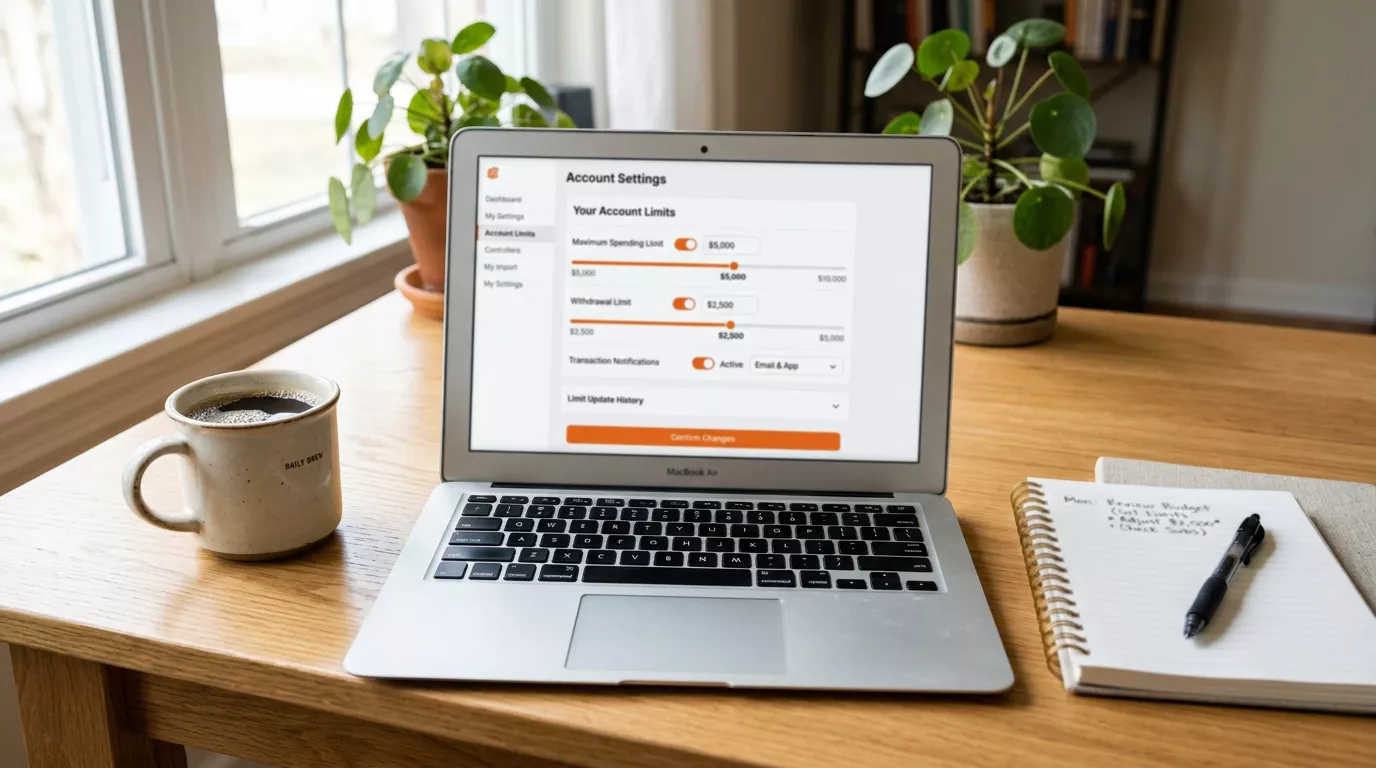
Every UKGC-licensed sportsbook is required to offer a suite of responsible gambling tools. Deposit limits let you cap how much money you can add to your account per day, week, or month. Reality checks interrupt your session at set intervals to show how long you have been betting and how much you have wagered. Loss limits and session timers provide additional guardrails. These tools are not signs of weakness — they are the betting equivalent of a seatbelt. I use deposit limits on every account I hold, not because I have a gambling problem but because I know that the late-night, live-betting environment of NBA wagering is designed to encourage impulsive decisions, and structural protections work better than willpower.
Do
- Set deposit limits before your first bet, not after your first loss.
- Use reality checks set to 30-minute or 60-minute intervals during live betting sessions.
- Keep betting money in a separate account from daily-living funds.
- Talk to someone you trust if betting stops feeling like entertainment and starts feeling like obligation.
Don’t
- Bet to recover money lost in previous sessions.
- Borrow money to fund betting activity under any circumstances.
- Ignore withdrawal patterns: if you find yourself cancelling withdrawals to keep betting, that is a warning sign.
- Dismiss self-exclusion as “extreme.” GamStop exists for a reason, and using it is a responsible decision, not a failure.
GamStop is the UK’s national self-exclusion scheme. Registering blocks you from all UKGC-licensed gambling sites for six months, one year, or five years. GamCare offers free counselling, the NHS provides specialist gambling clinics, and BeGambleAware runs a national helpline. These resources exist for anyone who recognises that their relationship with betting has shifted from controlled to compulsive.
I include this section not because regulators require it, but because ten years in this industry have shown me that the line between disciplined betting and harmful betting is thinner than anyone wants to admit. Decide your limits before you start and honour them regardless of results.
Frequently Asked Questions About Basketball Betting
How do basketball betting odds work in the UK?
UK sportsbooks display basketball odds primarily in decimal format. The decimal number represents your total return per pound staked — odds of 2.50 on a £10 bet return £25.00. You can switch to fractional or American format in your settings, but decimal is the default and the easiest to compare across operators. The odds reflect the bookmaker’s assessment of each outcome’s probability, plus a built-in margin that ensures the sportsbook profits regardless of the result.
What types of bets can you place on a basketball game?
The main types are moneyline (picking the outright winner), point spread (betting on the margin of victory), and over/under totals (whether the combined score exceeds a set number). Beyond these, you can bet on player props, quarter and half results, futures, accumulators, and micro markets. A typical NBA game on a UK sportsbook offers around 1,800 distinct markets.
Is overtime included in basketball bets?
It depends on the bet type. Moneyline bets almost always include overtime. Point spread and totals vary: some sportsbooks settle on regulation time only. Half and quarter bets are settled on the relevant period and unaffected by overtime. Always check the specific market rules on your sportsbook before placing a bet — this is one of the most common sources of disputed settlements.
How does live (in-play) basketball betting work?
Live betting lets you place wagers while a game is in progress. The sportsbook continuously updates odds based on the current score, time remaining, and in-game events. Markets recalculate during every dead ball — timeouts, free throws, quarter breaks. You can bet on updated spreads, totals, moneylines, and micro markets like next team to score. Basketball’s constant scoring makes it particularly well-suited to in-play wagering.
Are basketball betting winnings taxable in the UK?
No. All gambling winnings in the UK — including basketball betting profits — are tax-free for the bettor. You do not need to report them to HMRC. The tax burden falls on operators through the point-of-consumption tax on gross gaming yield. This contrasts with the US, where sports betting winnings are taxable income.
What is the best strategy for betting on NBA games?
No single strategy guarantees profit, but the most consistently successful approaches share common elements: disciplined bankroll management (1-3% of bankroll per bet), line shopping across multiple sportsbooks, focusing deeply on a small number of markets rather than spreading attention thinly, tracking every bet to measure performance, and integrating relevant data — pace, defensive efficiency, rest days, injury reports — into pre-game analysis. Long-term winners execute fundamentals with discipline, not secret systems.
Is it legal to bet on basketball online in the UK?
Yes. Online basketball betting is fully legal in the UK through operators licensed by the UK Gambling Commission. The Gambling Act 2005 established the framework, and the UKGC oversees all licensed operators to ensure fair play, consumer protection, and responsible gambling standards. You must be 18 or older. Always verify that your sportsbook displays a valid UKGC licence number.
Created by the ”bet Basketball Game” editorial team.