Basketball Live Betting and In-Play Markets
 Available in US
- Identifying High-Value Odds in Basketball Live Betting Markets
- How In-Play Basketball Markets Open, Suspend, and Resettle
- Quarter-by-Quarter Live Betting Tactics
- Reading Momentum Shifts: Runs, Timeouts, and Foul Trouble
- Live Totals and Pace Adjustments
- When to Cash Out: Expected Value vs Emotional Exit
- Latency, Odds Lag, and the Realistic Edge for UK Bettors
- Live Betting Discipline: Rules That Protect Your Bankroll
- Live Betting Questions From UK Bettors
Identifying High-Value Odds in Basketball Live Betting Markets
I remember the exact bet that made me take live basketball betting seriously. It was a Bucks-Raptors playoff game, and Milwaukee trailed by 14 going into the fourth quarter. The live spread had shifted to Raptors -9.5. I took the Bucks, and Giannis Antetokounmpo scored 16 points in the final period to win by three. The pregame line had been Bucks -2.5 — a bet I had skipped because the value did not feel right. The live market handed me better odds than the pregame ever offered, because the crowd and the scoreboard had convinced the algorithms that Milwaukee was done. To execute these in-play tactics effectively, setting up a reliable basketball live streaming connection is absolutely essential to avoid costly delays.
That game crystallised something I had been sensing for months: the best basketball bets are often placed after tip-off, not before. Live/in-play betting now accounts for 62.35% of all online sports betting activity globally. That is not a fringe segment — it is the majority of the market. The shift has been driven by technology (faster data feeds, real-time odds engines) and by the nature of basketball itself. A sport with scoring every 20-30 seconds, constant momentum swings, and 48 minutes of continuous action is tailor-made for live wagering.
But live betting is also where bankrolls go to die if you approach it without structure. The speed is intoxicating. Markets update every few seconds during active play, and the temptation to chase a bad pregame bet with a reactive live bet is enormous. This guide is for UK punters who want to exploit the genuine edges that live basketball markets offer — without falling into the emotional traps that the format creates.
How In-Play Basketball Markets Open, Suspend, and Resettle
The mechanics of live basketball markets are more complex than pregame, and understanding the plumbing matters because it dictates when you can and cannot place a bet. Most UK sportsbooks keep their live basketball markets open during active play — meaning while the ball is in motion, you can submit a bet. But there are frequent suspensions, and knowing when they happen gives you a timing advantage.
Markets suspend during dead-ball situations that are likely to produce immediate scoring: free throws, out-of-bounds plays near the basket, and reviews. They also suspend briefly after every score while the algorithms recalculate odds based on the updated score, time remaining, and possession. This recalculation takes one to three seconds on major sportsbooks, though smaller operators may take longer. During that window, the market is frozen — you cannot place a bet.
The recalculation engine is fed by a live data stream, typically provided by Sportradar or a similar data partner. Sportradar now services roughly 1,800 markets per NBA game, and many of those are live markets that need continuous repricing. The data includes not just the score but also player tracking information — who is on the court, their real-time positioning, and event data like turnovers and fouls. In 2024, the NBA expanded its partnership with FanDuel to include access to player tracking data in real time, enabling a new generation of in-play markets that react to on-court movement, not just scoring events.
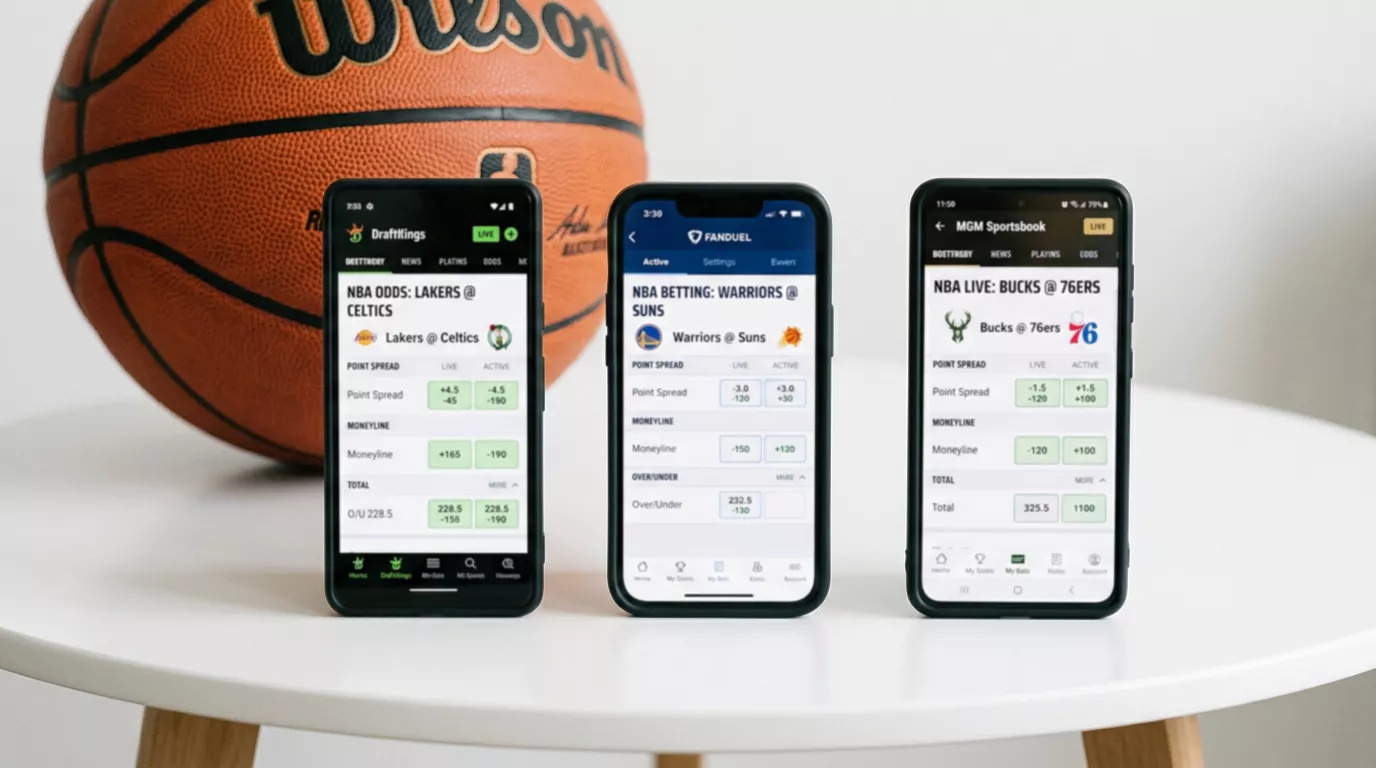
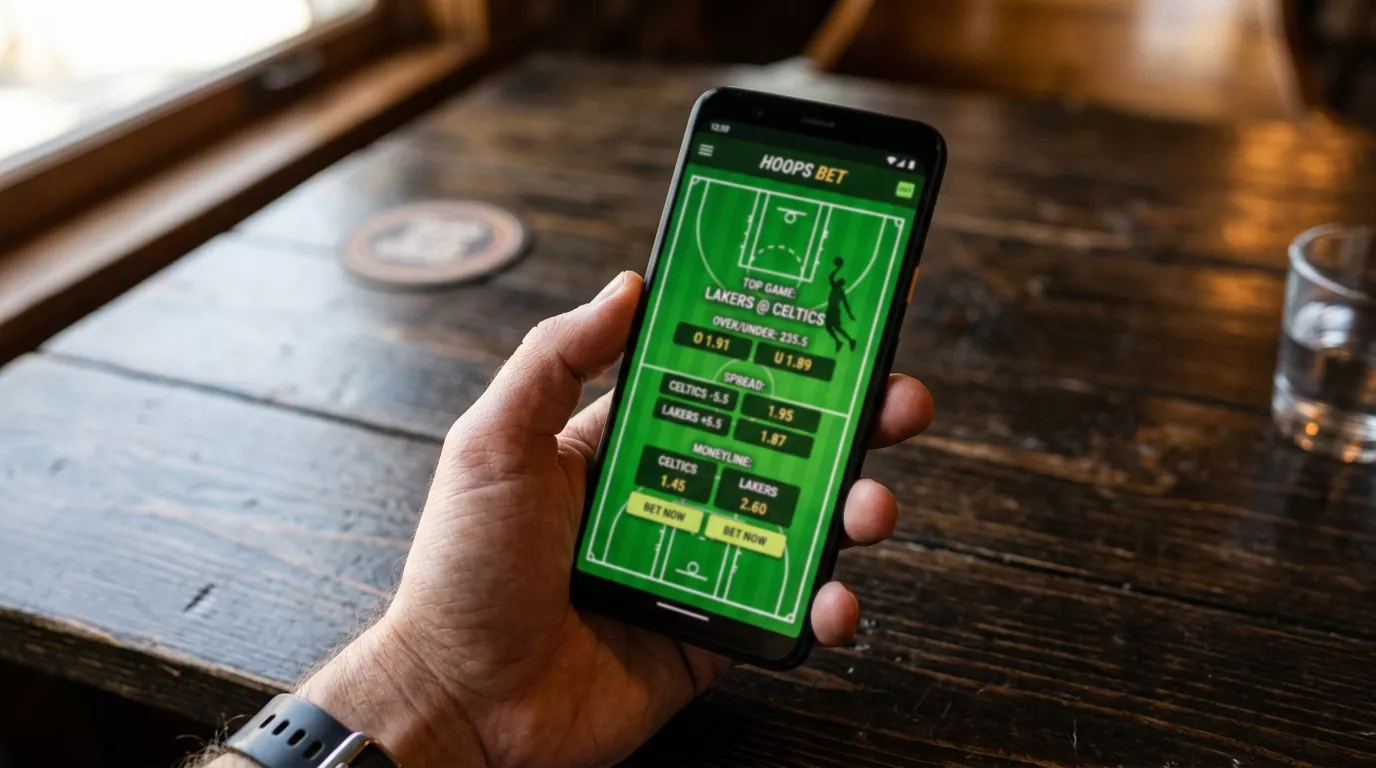
For UK punters, the practical implication is this: the live odds you see are driven by an automated system, not a human trader watching the game. Automated systems are fast but mechanical. They respond to events (scores, fouls, timeouts) but struggle with context (a team’s body language after a run, a coach’s strategic timeout that signals a tactical shift). That gap between mechanical repricing and contextual understanding is where human bettors find edges. If you are watching the game and the algorithm is not, you have an informational advantage — but only for the seconds before the algorithm catches up.
One more structural detail: live bet acceptance is not guaranteed. During high-volume moments (a lead change in the fourth quarter, a pivotal free throw), sportsbooks may delay acceptance or reject bets entirely. This is frustrating, but it is a feature, not a bug — the sportsbook is protecting itself from stale odds. If your bet is rejected, resist the urge to immediately resubmit at whatever odds are now available. The moment has passed; the price has moved.
Quarter-by-Quarter Live Betting Tactics
Each quarter of an NBA game has a distinct character, and my live betting approach shifts accordingly. Treating all 48 minutes the same is a mistake I made for my first two years of in-play wagering. The patterns are real, measurable, and exploitable.
The first quarter is the reconnaissance phase. Teams are testing defensive schemes, establishing pace, and feeling out matchups. Scoring in the first quarter tends to be lower than the game’s overall pace would suggest, because both teams are still calibrating. My first-quarter live play is usually patience: I watch for the first five minutes to identify the pace and then bet the live total under if the game starts sluggishly, or the live spread if one team is clearly outclassing the other in a way the pregame line did not anticipate.
The second quarter is where rotations create opportunities. NBA teams go deep into their benches during the second quarter, and the quality gap between starters and reserves varies wildly across the league. A team with a strong bench can extend a lead during this period, while a team with a shallow roster often gives back points. I focus on live spreads when a bench-heavy lineup is on the floor for one side, because the market may not fully discount the talent drop-off.
The third quarter is the most volatile — and the most profitable for live bettors who understand it. Half-time adjustments are invisible to the betting algorithm until they manifest in scoring. Over 1.8 million bets totalling roughly eighty-one million dollars were placed on third-quarter totals alone in the 2024-25 NBA season. That volume reflects a market that has recognised third-quarter variance as an opportunity. Teams that were shut down in the first half often come out with adjusted offensive sets. Teams that were rolling may face a tightened defensive scheme. I treat the first two minutes of the third quarter as a mini-preview: if the losing team comes out with changed body language and different actions, the live odds have not yet adjusted to that shift.
The fourth quarter demands selectivity. This is where emotional betting peaks — the game is close, the clock is ticking, and every possession feels urgent. I limit myself to one live bet per fourth quarter, maximum. The edge in the fourth quarter comes from understanding lineup decisions: is the coach riding his starters through fatigue, or is he conceding and pulling them? A team trailing by 15 with eight minutes left that keeps its starters in is making a different statement than one that waves the white flag and plays reserves. The live spread adjusts to the score but does not always adjust to the intent behind the lineup.
Reading Momentum Shifts: Runs, Timeouts, and Foul Trouble
Basketball is a game of runs. A team down 10 can be level within two minutes. I have watched 15-0 runs happen in real time more often than I can count, and every single one of them created a live betting opportunity — either the market overreacted to the run, or it was slow to catch up.
Timeouts are the first signal to watch. When a coach calls a timeout during an opposing run, it typically halts the momentum. The timeout gives the trailing team a chance to regroup, adjust defensively, and reset emotionally. Historically, the team that calls the timeout outscores the opponent in the three minutes following the break more often than not. If the live spread has moved sharply during a run, a timeout is your signal to evaluate whether the market has overcorrected.
Foul trouble is the second signal. When a team’s best player picks up their fourth foul in the third quarter, they usually sit for an extended stretch. The live odds will shift to reflect the absence, but the shift is often too aggressive. Star players returning from foul-trouble rest tend to play with heightened intensity, and their teams frequently mount late-game surges. If the live spread has moved five points against a team whose star is in foul trouble but not fouled out, that is worth serious consideration.
The third signal is pace change. A team down by double digits may deliberately increase pace — pushing the ball in transition, taking quicker shots — to generate more possessions and more opportunities to close the gap. This pace acceleration often correlates with a temporary scoring burst that shifts the live line. But pace-driven surges are energy-intensive and usually unsustainable. If you see a trailing team make a run driven purely by pace rather than defensive stops, the smart play is often to fade the momentum — bet against the team making the run, because the burst will likely exhaust itself.
Reading momentum is not mystical. It is pattern recognition applied in real time: timeout behaviour, foul context, and pace shifts are observable, measurable, and consistently mispriced by automated odds engines that respond to scoreboard changes without understanding why they happened.
Live Totals and Pace Adjustments
Live totals — the over/under on combined scoring from the current point of the game to the final buzzer — are my single most profitable live market. The reason is that pace is observable in real time but often mispriced by the live algorithm in the early minutes of the game.
Here is how I approach it. Before the game starts, I note the pregame total — say, 224.5. I also note each team’s pace ranking and offensive/defensive efficiency. Then I watch the first four to five minutes. If both teams are playing at a significantly faster or slower pace than their season averages suggest, the live total may not have adjusted enough. A game that starts 18-14 in the first five minutes is on pace for roughly 250 combined points. If the live total at that point reads 228.5, the over has value — assuming the pace is sustainable.
The “assuming the pace is sustainable” caveat matters enormously. First-quarter pace is not always indicative of full-game pace. Teams in early-season matchups or nationally televised games sometimes start at an unsustainably high tempo that settles down in the second quarter. Conversely, games between defensive-minded teams that start slow often stay slow because the coaching staffs are committed to grinding out possessions. Context determines whether the early pace is signal or noise.
The live under is often the more reliable play in high-scoring games that enter the fourth quarter with a large lead. Blowouts produce garbage time, and garbage-time scoring is lower-intensity with shorter possessions and less defensive effort. The live total may still reflect the high-scoring pace of the first three quarters, but the actual fourth-quarter scoring in a 20-point blowout typically drops well below the per-quarter average. I have hit live unders in blowout fourth quarters at a rate that significantly exceeds my overall betting average.
When to Cash Out: Expected Value vs Emotional Exit
Cash out is the feature UK sportsbooks promote most aggressively, and it is the feature I use most sparingly. Every cash-out offer is, by definition, a bet the sportsbook is willing to make — which means the price favours them, not you.
When you cash out, you are selling your position back to the sportsbook at a price they set. That price includes a margin, just like every other odds offering. If your bet is currently winning, the cash-out amount will be less than the expected value of letting the bet ride. If your bet is losing, the cash-out amount will be more than the expected value of the position, but you are locking in a guaranteed loss rather than holding for a possible recovery.
The average hold rate for American sportsbooks has climbed to 10.15% in 2025, up from 6.7% seven years earlier. The same margin-expansion trend applies to cash-out pricing. Sportradar has publicly noted that every percentage point of growth in in-game betting translates to roughly 1.6-1.7 million dollars in additional revenue for the company. Cash-out activity is a major component of that growth, which should tell you who benefits most from the feature.
I cash out only in two specific situations. First, when new information fundamentally changes my assessment — for example, a key player suffers an injury during the game that was not factored into my pregame analysis. Second, when the cash-out amount exceeds what my model says the position is worth, which happens occasionally when the algorithm misprices the live situation in my favour. Outside those two scenarios, I let my bets run. The discipline to avoid emotional cash-outs — grabbing a small profit because you are nervous, or cutting a loss because you cannot watch anymore — is one of the hardest things to develop in live betting, and one of the most financially important.
Latency, Odds Lag, and the Realistic Edge for UK Bettors
Let me be blunt about something the gambling industry prefers not to discuss: the odds you see on your screen are not the odds that exist at this exact second. There is always a delay — a latency gap between the real-time event on the court and the odds update on your sportsbook app. That gap ranges from half a second to several seconds, depending on your sportsbook’s data infrastructure.
Professional live bettors in the United States exploit latency by using faster data feeds and placing bets before the sportsbook’s odds engine catches up to reality. This practice, sometimes called “courtsiding” when done from the arena itself, is technically legal in most jurisdictions but frowned upon by operators. For UK punters watching an NBA game on a standard broadcast with a 5-10 second TV delay, the odds on your screen are actually ahead of what you are seeing. You are at a latency disadvantage relative to the sportsbook, not an advantage.
This does not mean live betting is futile for UK punters — far from it. The edges I have described in this article (momentum reads, pace adjustments, micro-market mispricings) are contextual, not speed-based. They arise from understanding game flow better than an algorithm, not from seeing a basket before the sportsbook does. The NBA’s expanded data partnership with its official partners means that the automated odds engine knows the score before you do. Your edge is interpretation, not information speed.
Practically, this means you should avoid betting on events that just happened — a basket, a foul, a turnover. By the time you see it on your stream and react, the odds have already adjusted. Instead, bet on situations you anticipate — a team’s tendency to collapse in the third quarter, a coach’s predictable timeout patterns, a player’s usage surge when a teammate goes to the bench. Anticipation-based live betting neutralises the latency disadvantage because you are acting on analysis, not reaction.
Live Betting Discipline: Rules That Protect Your Bankroll
The single biggest risk in live basketball betting is volume. The markets are always open, the odds are always changing, and the temptation to bet on every shift is relentless. I have watched experienced punters blow through an entire month’s bankroll in one NBA game because they kept doubling down on live bets after each swing went against them.
My rules are non-negotiable: maximum three live bets per game, predetermined stake sizes before the game starts, and no live bets in the final two minutes of a close game unless I have a specific, pre-identified angle. The final two minutes of a tight NBA game are pure chaos — intentional fouls, timeouts, replay reviews, and free throws that create violent odds swings. Betting into that chaos is gambling in the purest, least strategic sense of the word.
I also keep a separate bankroll for live betting, distinct from my pregame bankroll. This forces me to think of live betting as its own discipline rather than an extension of pregame analysis. When the live bankroll is spent for the night, I stop. No borrowing from the pregame fund, no “just one more.” The separation is psychological as much as financial — it creates a hard boundary that the continuous flow of live markets would otherwise erode.
If you take one principle from this entire guide, make it this: live betting rewards patience and punishes impulse. The best live bets I have ever placed were ones I waited minutes for, watching the game, waiting for a specific situation to develop, and then acting decisively. The worst were reactive — a team scored, I panicked, I chased. Structure beats spontaneity in live markets, every time. Stay ahead of the game with real-time updates from the best basketball betting site in the UK.
Live Betting Questions From UK Bettors
Can I place live bets on basketball quarters and halves separately?
Yes. Most UK sportsbooks offer separate live markets for each quarter and each half of an NBA game. These include quarter spreads, quarter totals, and half-time results that settle independently from the full-game markets. Quarter markets are particularly active during the third quarter, where half-time adjustments create scoring volatility that attracts significant betting volume.
How quickly do in-play basketball odds change compared to football?
Basketball live odds change far more frequently than football. An NBA game produces a scoring event every 20-30 seconds on average, and each score triggers an odds recalculation. Football matches can go 15-20 minutes without a significant event that shifts the live line. During an active NBA possession, odds may update multiple times in under ten seconds. This speed creates both opportunity and risk for live bettors.
Is live basketball betting available on all UK sportsbook apps?
All major UKGC-licensed sportsbooks offer live basketball betting on NBA games, and most cover EuroLeague as well. The depth of live markets varies between operators — some offer only live moneyline and spread, while others provide quarter markets, player props, and micro markets during live play. Check your sportsbook’s live betting section during an NBA game to see the full range of available markets.
Do bookmakers limit accounts for winning live bettors?
Sportsbooks can and do restrict accounts that demonstrate consistently profitable live betting patterns. This is more common with live betting than pregame because live edges are often sharp and repeatable. Restrictions may include reduced maximum stakes, delayed bet acceptance, or removal of cash-out options. Using multiple sportsbooks and varying your bet sizes can help manage this risk, though there is no guaranteed way to avoid restrictions if you are consistently winning.
Prepared by the bet Basketball Game editorial staff.