Basketball Over/Under Betting and NBA Totals
 Available in US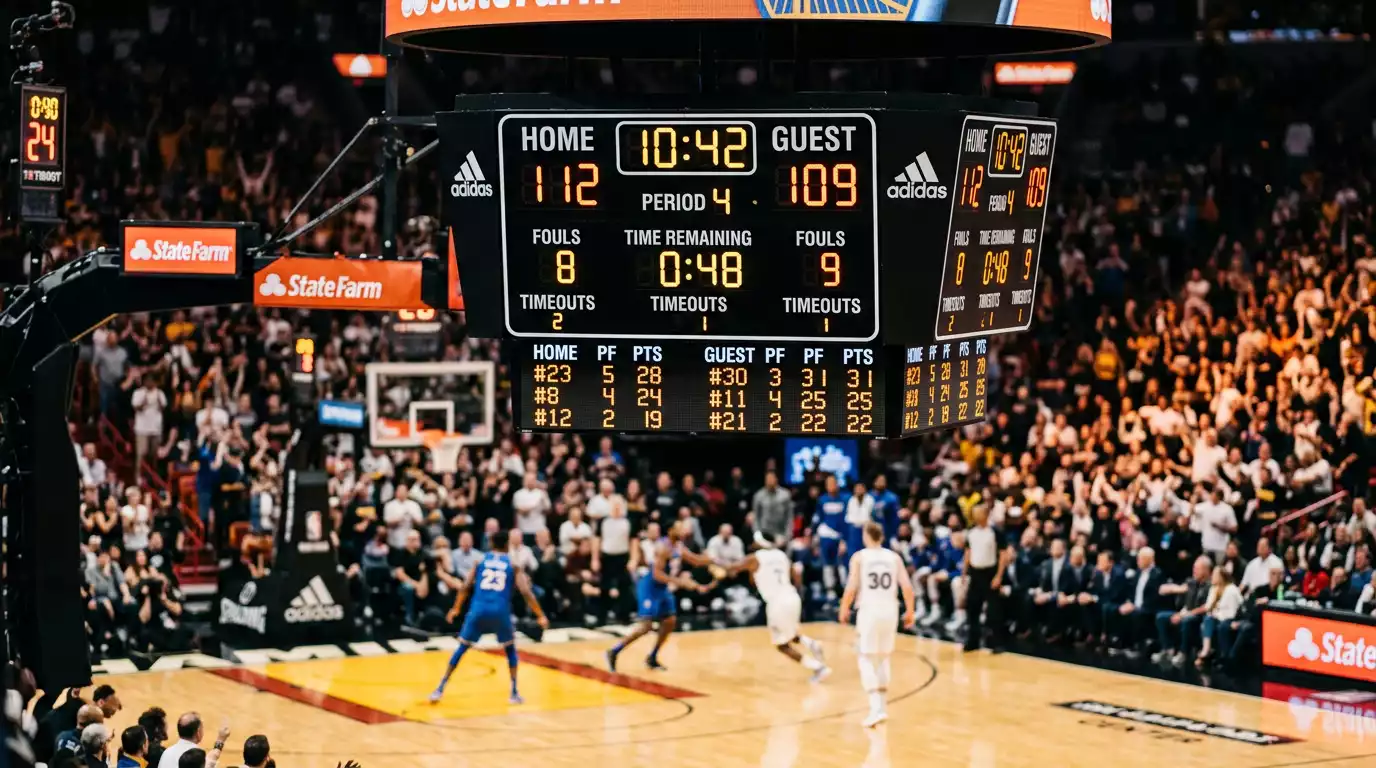
Calculating Scoring Averages for Basketball Over/Under Betting
I spent my first two years betting on basketball obsessing over who would win. Moneyline this, spread that. Then a friend in Manchester told me he hadn’t picked a match winner in months — he only bet totals. “I don’t care who wins,” he said. “I care how many points hit the board.” That conversation rewired how I think about basketball markets.
Over/under betting — also called totals — reduces a basketball game to a single question: will the combined score of both teams finish above or below the line the bookmaker sets? You are not backing either side. You are reading the game’s tempo, its rhythm, its likely scoring output, and deciding whether the market has it right. During the 2024-25 NBA season, Sportradar recorded more than 1.8 million bets totalling roughly $81 million placed on third-quarter totals alone. That is one sub-market inside one league, and it tells you everything about where the betting public’s attention is heading.
If you have been betting on football totals in the Premier League, the concept transfers directly — but the numbers look radically different. A football total might sit at 2.5 goals. An NBA total sits north of 220 points on most nights. That volume of scoring changes everything about how you analyse the market, and this guide breaks down exactly how.
How Over/Under Lines Are Set for Basketball
Bookmakers do not pluck a number from thin air. The opening line on a typical NBA game — let’s say Golden State at Boston — begins with a projection model. That model factors in each team’s offensive and defensive ratings per 100 possessions, recent scoring averages, pace of play, rest days, injuries, and even arena altitude. The result is a raw projected total, something like 223.7 points.
The sportsbook then adds its margin. On a UK site displaying decimal odds, you will usually see the over at 1.90 and the under at 1.90, with the overround baked into that price. The line itself — 223.5 in this case — is calibrated to split action roughly evenly. If 80% of money floods the over, the book moves the line up to 224.5 or 225 to balance its liability. This is why the number you see at noon may not match the number at tip-off.
Understanding this process matters because it reveals what the line is not. It is not the sportsbook’s prediction of the exact final score. It is the number designed to attract equal weight on both sides. When you spot a gap between the market’s line and your own assessment, that is where value lives.
On UK sportsbooks, basketball totals are almost always set at a half-point — 219.5, 224.5, 231.5 — to eliminate the possibility of a push. If you see a whole number, expect to find a three-way market: over, under, and exactly that number. Most punters stick to the half-point lines because the pricing is cleaner.
Pace, Possessions, and Offensive Efficiency
Pace is the engine behind every basketball total, and it took me an embarrassingly long time to grasp that fully. Two teams can both average 110 points per game, but if one plays at 102 possessions per 48 minutes and the other at 95, their head-to-head total will look very different from what their averages suggest. You are not really predicting points — you are predicting possessions, then estimating what each team does with them.
The NBA publishes pace data openly through its stats portal. Offensive efficiency (points per 100 possessions) and defensive efficiency (points allowed per 100 possessions) give you the two halves of the equation. Multiply a team’s expected possessions by their opponent’s defensive efficiency, then do the reverse, and you get a rough projected total. During the 2024-25 season, Sportradar was processing data across 1,800 markets per typical NBA match — a threefold increase over the year before — and much of that expansion came from granular scoring and possession-based micro markets.
Injuries to high-usage players are the variable most punters underrate on totals. Lose a point guard who controls 30% of his team’s possessions and the offence does not just get worse — it gets slower. The team runs more isolation, wastes clock, and the total drops. Conversely, some backup lineups actually play faster because they run a simpler, transition-heavy system. Always check the injury report against usage rates, not just scoring averages.
Half and Quarter Totals: Where Sharper Edges Exist
Full-game totals get the most attention. Half and quarter totals get the sharper money. I have tracked my own results across 600+ NBA totals bets over two seasons, and my edge on quarter-specific lines is roughly double what it is on full-game markets. The reason is straightforward: less public money flows into quarter totals, which means the lines are set with thinner data and move less efficiently.
Third-quarter totals deserve special attention. NBA teams return from the locker room with adjusted game plans, and that halftime break creates a natural inflection point. Coaches make their biggest tactical shifts at half-time — switching defensive schemes, changing rotations, adjusting pace. The third quarter is where those shifts show up in the scoring data first, and books have historically been slower to price them accurately. The $81 million wagered on third-quarter totals during the 2024-25 NBA season reflects a market that is growing fast but still offers more value than the headline full-game number.
First-quarter totals are a different animal. Starters play heavy minutes, rotations are predictable, and both teams execute their primary sets. If you know a team’s first-unit offensive and defensive ratings — which are available on most free NBA stats sites — you can build a reasonable first-quarter projection in minutes. The line is typically set around 55-58 points combined for an average NBA game, and deviations of two or three points from your projection happen regularly enough to be actionable.
For a deeper look at how to structure quarter-specific bets and which patterns hold up across seasons, I have written a dedicated quarter betting strategy guide that walks through the data.
When to Bet Over and When to Bet Under
Most beginners default to overs. It feels right — you are cheering for action, for points, for highlight-reel plays. But the data suggests unders have a structural edge over long stretches of the NBA season, particularly in the second half when fatigue accumulates, the schedule compresses, and teams that have clinched playoff spots coast through meaningless regular-season games.
Bet the over when two genuine pace-up teams meet, both ranked in the top ten for possessions per game, with no significant injuries to their primary ball handlers. Bet it when the game has playoff implications for both sides and their recent head-to-head history shows scoring above the current line. The over also tends to hit at higher rates in early-season games when defences have not yet gelled and offensive systems are further along.
Bet the under when one team is a defensive grinder — bottom five in pace, top ten in defensive efficiency. Bet it on the second night of a back-to-back, especially when the travelling team flew across two or more time zones. Fatigue does not reduce shooting accuracy as much as you would expect; what it does is slow transition opportunities, increase half-court possessions, and shorten the shot clock usage window. All of those factors push scoring down.
One rule I follow religiously: never bet a total based on one team’s recent scoring alone. A team that scored 130 last night did so against a specific opponent in a specific context. The total for their next game is a different question entirely, and anchoring to that 130 is the single most common mistake I see UK punters make when they first move into totals markets.
The Number That Matters More Than the Winner
Totals betting removes the tribalism from basketball wagering. You do not need to pick a side, predict an upset, or agonise over late-game heroics. You need to understand pace, efficiency, and context — and those are measurable, researchable, and far less volatile than trying to guess which team will hit a buzzer-beater. For UK punters looking to build a systematic approach to basketball betting, totals are the market where data gives you the clearest signal and where the bookmaker’s line is most vulnerable to informed analysis.
Does overtime count in over/under basketball bets?
On most UK sportsbooks, yes — overtime scoring is included in the settlement of full-game over/under bets unless the market explicitly states ‘regular time only.’ Always check the specific rules on your sportsbook, but the standard across major UK operators is to include OT in the final total.
How do rest days affect NBA totals?
Rest days influence pace more than shooting accuracy. A well-rested team tends to push transition offence harder, generating more possessions and inflating scoring. On the second night of a back-to-back, teams slow down, run more half-court sets, and the total trends lower — particularly when the fatigued team is also travelling across time zones.
Written by the editors at bet Basketball Game.